



TXB2
Thromboxane B₂ (TXB₂) is best defined as a stable metabolite of biologically active thromboxane A₂ (TXA₂), while receptor-level signaling is mediated by the TXA₂/prostaglandin H₂ receptor (TP) rather than a distinct TXB₂ receptor[1]. Mechanistically, TXA₂/TP signaling supports platelet activation, vascular responses, and thrombotic disease biology, and aspirin reduces thromboxane-mediated platelet activation by irreversibly inhibiting platelet COX-1[2]. Because plasma TXB₂ can be confounded by ex vivo platelet activation, 11-dehydro-TXB₂ provides a more appropriate index of TXA₂ formation in human circulation[3]. In disease models, urinary 11-dehydro-TXB₂ reflects thromboxane generation in diabetes, coronary artery disease, sickle cell disease, and atherosclerotic cardiovascular disease[2][4][5]. Compared with related isoforms, human TP exists as TPα and TPβ, which arise from alternative mRNA splicing and differ in their carboxyl-terminal cytoplasmic regions[6]. TPβ shows distinct relevance in bladder cancer, where TPβ expression promoted proliferation, migration, invasion, and poorer prognosis[7]. For experimental applications, TXB₂ and 11-dehydro-TXB₂ are practical readouts of thromboxane biosynthesis, whereas TP antagonists or TXA₂ synthase inhibitors directly interrogate receptor signaling and pathway dependence[8].
References:
- [1]. Ting HJ, et al. Thromboxane A2 receptor: biology and function of a peculiar receptor that remains resistant for therapeutic targeting. J Cardiovasc Pharmacol Ther. 2012 Sep;17(3):248-59. [Content Brief]
- [2]. Lopez LR, et al. Platelet thromboxane (11-dehydro-Thromboxane B2) and aspirin response in patients with diabetes and coronary artery disease. World J Diabetes. 2014 Apr 15;5(2):115-27. [Content Brief]
- [3]. Catella F, et al. 11-Dehydrothromboxane B2: a quantitative index of thromboxane A2 formation in the human circulation. Proc Natl Acad Sci U S A. 1986 Aug;83(16):5861-5. [Content Brief]
- [4]. Foulon I, et al. Increased in vivo production of thromboxane in patients with sickle cell disease is accompanied by an impairment of platelet functions to the thromboxane A2 agonist U46619. Arterioscler Thromb. 1993 Mar;13(3):421-6. [Content Brief]
- [5]. Wang N, et al. Urinary 11-dehydro-thromboxane B2 levels are associated with vascular inflammation and prognosis in atherosclerotic cardiovascular disease. Prostaglandins Other Lipid Mediat. 2018 Jan;134:24-31. [Content Brief]
- [6]. Miggin SM, et al. Expression and tissue distribution of the mRNAs encoding the human thromboxane A2 receptor (TP) alpha and beta isoforms. Biochim Biophys Acta. 1998 Nov 27;1425(3):543-59. [Content Brief]
- [7]. Moussa O, et al. Novel role of thromboxane receptors beta isoform in bladder cancer pathogenesis. Cancer Res. 2008 Jun 1;68(11):4097-104. [Content Brief]
- [8]. Golino P, et al. Endogenous prostaglandin endoperoxides and prostacyclin modulate the thrombolytic activity of tissue plasminogen activator. Effects of simultaneous inhibition of thromboxane A2 synthase and blockade of thromboxane A2/prostaglandin H2 receptors in a canine model of coronary thrombosis. J Clin Invest. 1990 Oct;86(4):1095-102. [Content Brief]
All Product Categories
-
TXB2 Related Products (9)
Related Products (9)

-
Ozagrel
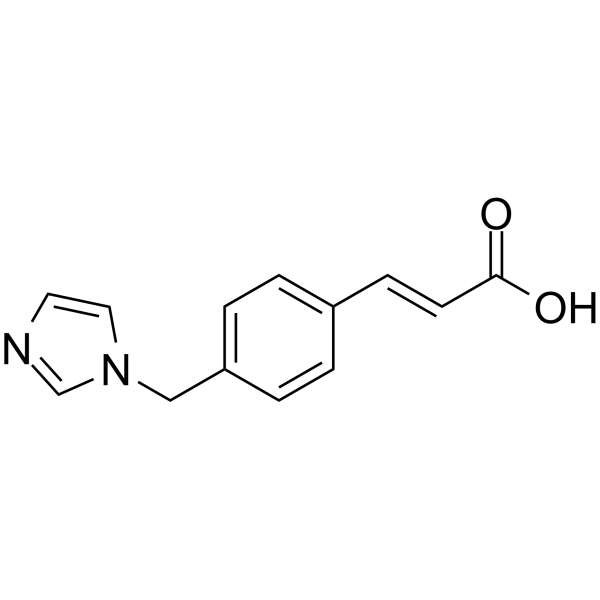 0 ImagesSynonyms: OKY-046Ozagrel (OKY-046) is a high selective and orally active thromboxane A2 (TXA2) synthase inhibitor with an IC50 of 11 nM. Ozagrel exerts anti-platelet aggregation, vasodilation and anti-inflammatory effects by inhibiting the production of TXA2 and increasing the production of prostacyclin (PGI2). Ozagrel can be used for the study of ischemic stroke, asthma and thromboembolic diseases.
-
Ozagrel hydrochloride
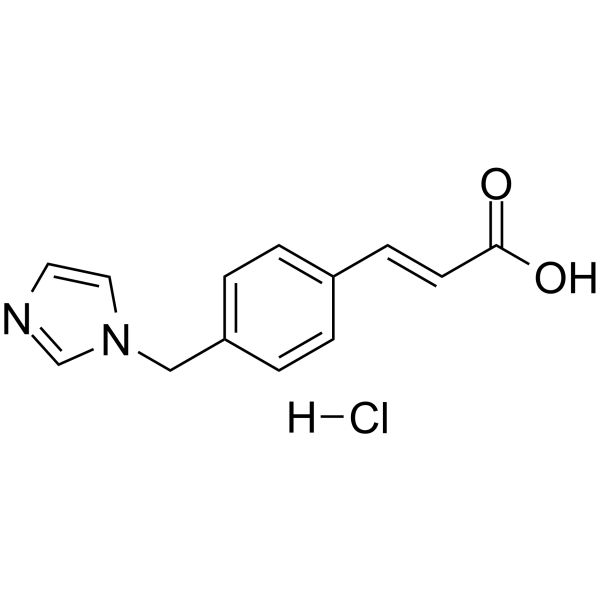 0 ImagesSynonyms: OKY-046 hydrochlorideOzagrel hydrochloride (OKY-046 hydrochloride) is a high selective and orally active thromboxane A2 (TXA2) synthase inhibitor with an IC50 of 11 nM. Ozagrel hydrochloride exerts anti-platelet aggregation, vasodilation and anti-inflammatory effects by inhibiting the production of TXA2 and increasing the production of prostacyclin (PGI2). Ozagrel hydrochloride can be used for the study of ischemic stroke, asthma and thromboembolic diseases.
-
Ozagrel sodium
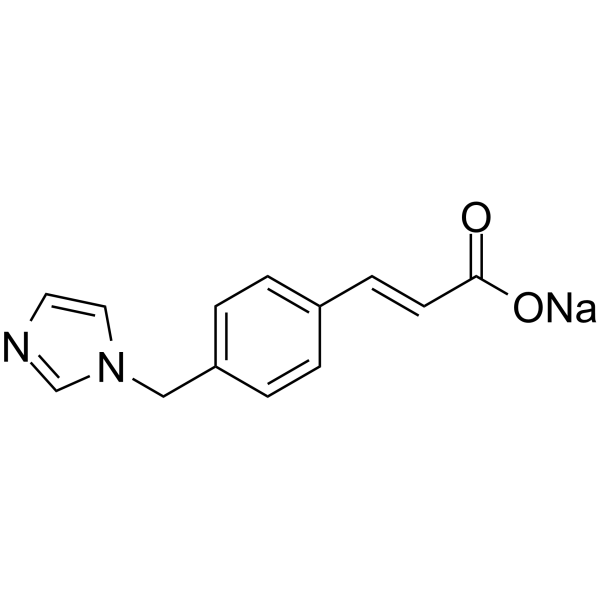 0 ImagesSynonyms: OKY-046 sodiumOzagrel sodium (OKY-046 sodium) is a high selective and orally active thromboxane A2 (TXA2) synthase inhibitor with an IC50 of 11 nM. Ozagrel sodium exerts anti-platelet aggregation, vasodilation and anti-inflammatory effects by inhibiting the production of TXA2 and increasing the production of prostacyclin (PGI2). Ozagrel sodium can be used for the study of ischemic stroke, asthma and thromboembolic diseases.
-
(E/Z)-Ozagrel sodium
 0 ImagesCat. No.: HY-B0428DCAS No.: 130952-46-4Synonyms: (E/Z)-OKY-046 sodium(E/Z)-Ozagrel sodium [(E/Z)-OKY-046 sodium] is an EZ configuration mixture of Ozagrel sodium (HY-B0428A). Ozagrel sodium (OKY-046 sodium) is a high selective and orally active thromboxane A2 (TXA2) synthase inhibitor with an IC50 of 11 nM. Ozagrel sodium exerts anti-platelet aggregation, vasodilation and anti-inflammatory effects by inhibiting the production of TXA2 and increasing the production of prostacyclin (PGI2). Ozagrel sodium can be used for the study of ischemic stroke, asthma and thromboembolic diseases.
-
Ozagrel hydrochloride (Standard)
 0 ImagesSynonyms: OKY-046 hydrochloride (Standard)Ozagrel hydrochloride (Standard) is the analytical reference standard of Ozagrel hydrochloride (HY-B0428B). Ozagrel hydrochloride (OKY-046 hydrochloride) is a high selective and orally active thromboxane A2 (TXA2) synthase inhibitor with an IC50 of 11 nM. Ozagrel hydrochloride exerts anti-platelet aggregation, vasodilation and anti-inflammatory effects by inhibiting the production of TXA2 and increasing the production of prostacyclin (PGI2). Ozagrel hydrochloride can be used for the study of ischemic stroke, asthma and thromboembolic diseases.
-
CI-949
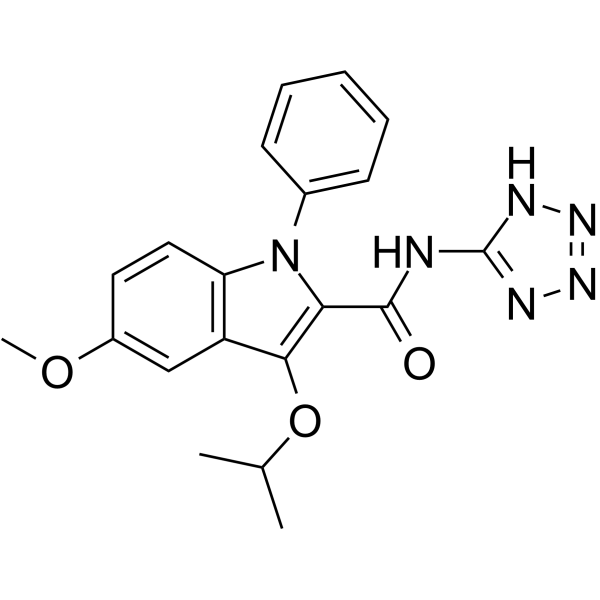 0 ImagesCat. No.: HY-U00364CAS No.: 104961-19-5CI-949 is an allergic mediator release inhibitor, which inhibits histamine, leukotriene C4/D4 (LTC4/LTD4), and thromboxane B2 (TXB2) release with IC50s of 11.4 μM, 0.5 μM and 0.1 μM, respectively.
-
Bunaprolast
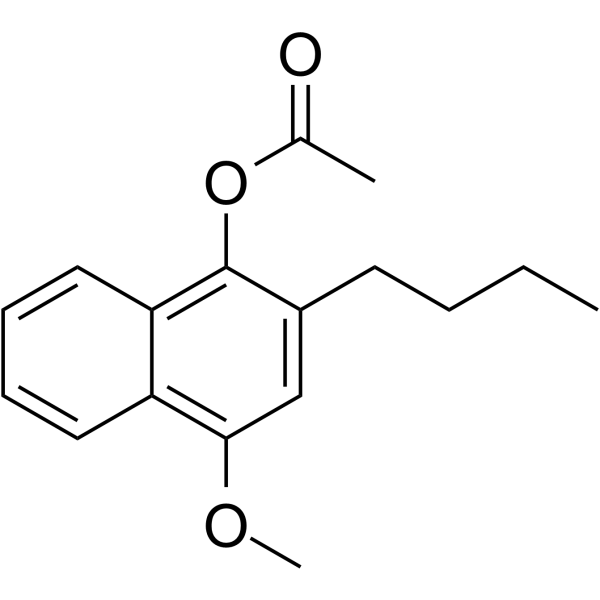 0 ImagesCat. No.: HY-U00170CAS No.: 99107-52-5Synonyms: U66858Bunaprolast (U66858) is a potent inhibitor of LTB4 production in human whole blood. Bunaprolast (U66858) also exhibits significant inhibition of lipoxygenase and TXB2 release.
-
KF 13218
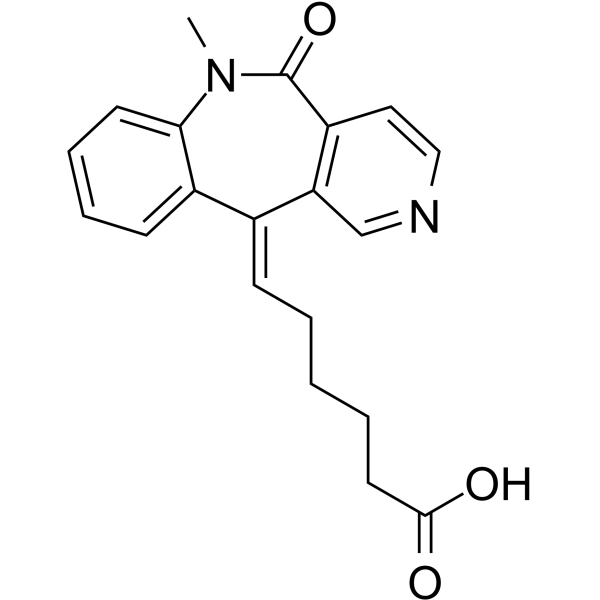 0 ImagesCat. No.: HY-U00231CAS No.: 127654-03-9KF 13218 is a potent, selective and long lasting thromboxane B2 (TXB2) synthase inhibitor with an IC50 value of 5.3±1.3 nM.



